Valorant Calm Aim and Phoenix Setup Explained
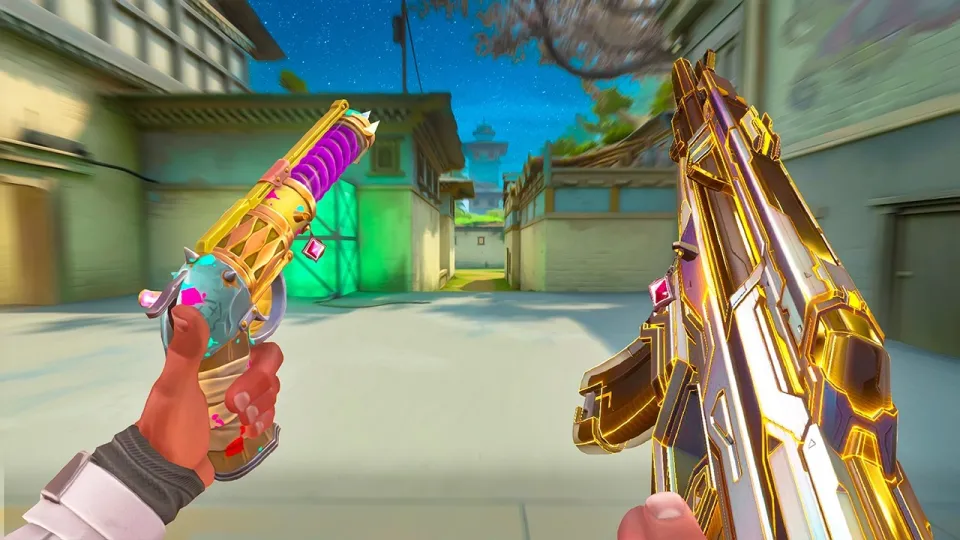
Video: low cortisol aim..
Need articles like this for your video? They help promote it on YouTube and Google — order them in the Telegram bot @sat_sit_bot. It writes articles around your video, embeds the video and publishes them on popular niche websites (no ads). Your first 50 articles are free.
· based on the channel Rawzu
Valorant calm aim is the idea that precise, repeatable flicks come from low tension rather than high intensity: a stable sensitivity, a consistent crosshair, and a routine that keeps the wrist loose. Rawzu's "low cortisol aim.." clip leans on exactly that — Phoenix gameplay built on quiet tracking and short, controlled corrections rather than frantic swipes. If you want the same starting point, grab the Hone optimization setup the creator links in the description, then match the in-game numbers below.
What the Rawzu Valorant settings actually are
Rawzu's configuration is deliberately on the slow side, which is the mechanical backbone of a low-stress aim style. Every number below comes straight from the video description, so you can copy it without guessing:
- Sensitivity: 400 DPI with 0.625 in-game, which works out to 250 eDPI.
- Resolution: 1440x1080, a stretched 4:3 format that widens targets horizontally.
- Crosshair: 1-6-2-2, a small static-style setup with a tight gap.
- Mouse: Logitech G Pro X Superlight 2, a lightweight wireless shape.
- Mousepad: Artisan Zero Soft, a control-leaning cloth pad.
- Monitor: Zowie XL2566K at 360Hz.
At 250 eDPI, a full 360-degree turn takes noticeably more arm travel than the 400–800 eDPI range many Valorant players default to. The trade-off is obvious: slower turns, but far fewer overshoots. On a control pad like the Artisan Zero Soft, stopping power is high, so micro-adjustments on a distant head land without a second correction. The 360Hz panel matters less for raw reaction time and more for how smoothly you can read a swing during a Phoenix entry.
Why Phoenix fits a calm aim style
Phoenix is an offensive duelist who hunts enemies while crippling their ability to fire back, and that kit rewards a player who stays composed. Blaze creates a wall that blocks vision and damages anyone walking through it, letting Phoenix cross open ground that would otherwise be pre-aimed. Curveball throws a flash that blinds enemies even when they are tucked behind corners, so the duel starts with the opponent's crosshair off you.
Hot Hands adds a molotov-style zone that also heals Phoenix when he stands in it, and Run It Back lets him die, respawn at the marker and re-enter the fight. The practical result is a duelist who can take a first contact, lose it, and come back — which means you do not need to force a miracle flick on every engagement. Calm aim and Phoenix share the same logic: take the fight on your terms, with a flash or wall in front of you, and let the shot be the easy part.
Building a low cortisol aim routine
A calm aim style is a training habit, not a personality trait, and it can be built in short daily blocks. The goal is to make the first shot boring:
- Warm up with slow, deliberate flicks at a fixed distance before adding speed; accuracy first, pace second.
- Keep one sensitivity for at least a couple of weeks. Constant eDPI changes destroy the muscle memory that makes aim feel effortless.
- Practice counter-strafing so you stop before you shoot; movement error is the most common reason a good flick misses.
- Use Deathmatch to rehearse entries with Curveball and Blaze rather than to chase kill counts.
- Breathe out on the shot. Tension in the forearm is what turns a small correction into a wild swipe.
The same applies to hardware. A lightweight mouse plus a control pad is a low-friction combination: the mouse moves easily, the pad stops it. Players who run a fast pad with a very low sensitivity often fight their own setup, and that friction shows up as rushed, jittery aim under pressure.
Common questions from the comments
Viewers regularly push back on two things in clips like this: whether such a slow sensitivity is actually viable, and whether the stretched resolution is doing the work. Both are fair. A 250 eDPI setup demands more arm movement and a larger desk area, and it is genuinely worse for players who rely on wrist flicks at close range. The resolution question is simpler: 1440x1080 stretches the image, so models appear wider and easier to hit, but it also distorts movement speed perception, and it takes a few sessions to adjust.
Another recurring theme is the audio. Clips cut for a satisfying, ASMR-style feel often spike in volume, which is why viewers report turning speakers down mid-video. If you are copying the routine, keep your own game audio at a level where footsteps stay audible without masking gunfire cues. Finally, several commenters ask for a dedicated settings video — the numbers above are the answer, but the reason they work together matters more than any single value.
Crosshair, resolution and peripheral choices
The 1-6-2-2 crosshair is a compact, low-clutter shape that keeps the target visible during tracking. In Valorant, a small crosshair with a tight inner gap makes head-level holds easier to read at range, especially on stretched 1440x1080 where heads are already wider. If you switch to this code, give it a full session before judging it; crosshair changes feel wrong for the first hour purely because your eye is recalibrating.
Peripheral choice follows the same logic of reducing variables. The Superlight 2 keeps weight low so arm-driven turns at 250 eDPI do not fatigue the shoulder, and the Artisan Zero Soft supplies enough stopping force for precise micro-corrections. The 360Hz monitor is the least important piece for most players — a stable frame rate matters more than the refresh ceiling, which is where a proper PC optimization pass comes in.
Useful links
- Hone PC optimization for Valorant — the setup link from the video description.
- Rawzu's original music on Spotify
- Rawzu Discord community
Final thoughts on calm Valorant aim
The takeaway from Rawzu's "low cortisol aim.." clip is that consistency beats intensity: 400 DPI at 0.625, a 1-6-2-2 crosshair, 1440x1080 stretched, and a control-oriented mouse and pad combination form a setup designed for repeatable first shots. Pair that with Phoenix's Blaze, Curveball and Run It Back and you get a duelist who can take space without panic-flicking every angle. Build the habit in short daily blocks, keep your sensitivity fixed, and let the mechanics become background noise. If you want the same foundation, start with the Hone optimization link from the video and copy the settings above. The breakdown is based on the Rawzu channel's own published settings and clip.
Key takeaways
- Rawzu runs 400 DPI at 0.625 in-game sensitivity, an effective eDPI of 250.
- Resolution is 1440x1080, a stretched 4:3 ratio on a Zowie XL2566K 360Hz monitor.
- Crosshair code values: 1-6-2-2; mouse is a Logitech G Pro X Superlight 2 on an Artisan Zero Soft.
- The clip is Phoenix gameplay, an offensive duelist built around Blaze walls, Curveball flashes and Run It Back.
- The video is titled "low cortisol aim.." and published by the Rawzu channel on 14.10.2026.
Source: low cortisol aim.. · Markdown version
Questions & answers
Is 400 DPI and 0.625 sensitivity too slow for Valorant?
It equals 250 eDPI, which is below the 400–800 range most players use, but it is perfectly viable for arm aimers with enough desk space. The upside is fewer overshoots and more consistent micro-corrections; the downside is slower 180-degree turns and more shoulder movement. Try it for at least a week before deciding, since the first sessions will feel sluggish.
Does 1440x1080 stretched resolution actually help you hit more shots?
It widens enemy models horizontally, which makes heads easier to see and track, and it can raise perceived movement speed. The trade-off is distortion and an adjustment period, plus a slightly different feel when clearing tight angles. It is a preference, not a requirement — many top players still use native 16:9.
What does the 1-6-2-2 crosshair code mean?
The four values describe the crosshair's outline, thickness, gap and dot settings in Valorant's crosshair menu. This particular combination produces a small, tight shape with minimal clutter, which suits head-level holds at range. Import or set it manually and give it a full session before changing it again.
Why does Phoenix suit a calm aim style?
Curveball blinds enemies even behind corners and Blaze blocks vision while dealing damage, so Phoenix can start duels with the opponent's crosshair already displaced. Run It Back even lets him re-enter a fight after dying, reducing the pressure to win every aim duel instantly. That structure rewards patience and clean first shots over frantic flicking.